

High-selectivity H2 cartridges
Our modules utilize a proprietary polymeric hollow fiber structure designed for the selective permeation of "fast gases". By leveraging advanced polymer chemistry, Semicom modules effectively separate Hydrogen from complex streams containing Methane, CO, and heavy hydrocarbons.
High-selectivity H2 cartridges
Our modules utilize a proprietary polymeric hollow fiber structure designed for the selective permeation of "fast gases". By leveraging advanced polymer chemistry, Semicom modules effectively separate Hydrogen from complex streams containing Methane, CO, and heavy hydrocarbons.
Industrial hydrogen networks often contain valuable H2 mixed with inert and reactive components. Semicom membrane systems are designed to reclaim hydrogen from such mixed streams while delivering a defined product specification and minimizing hydrogen losses.
Semicom HPM are typically installed as a hydrogen recovery or polishing step in gas handling trains where you want to:
The core separation element is a membrane bundle made of polymeric hollow fibers. When a pressure-driven gradient is applied across the fiber wall, hydrogen permeates preferentially relative to other components. A hydrogen-enriched product stream is withdrawn on one side of the membrane, while the remaining gas stays pressurized in the complementary stream. The operating point is set by feed composition, pressure, temperature, and the target purity/recovery balance.
Semicom systems are engineered to operate across a wide range of industrial compositions and can be configured to meet demanding targets, including:

Semicom modules are built around dense fiber bundles – up to 1.2 million fibers in a 12-inch cartridge – enabling high membrane area within a small volume. This reduces pressure vessel size and can lower overall installed footprint and material intensity.

The membrane separation element is a static component with no rotating internals. This architecture supports stable, continuous operation and simplifies routine maintenance planning.

Systems can be scaled by adding cartridges in parallel. This approach supports staged growth and makes it easier to adjust capacity as operating conditions evolve.

Membrane systems reach operating conditions quickly and can be run across a broad load range without sacrificing the fundamental separation mechanism.

Industrial hydrogen-bearing streams often contain reactive or challenging trace components. Semicom fibers are formulated for chemical resistance in the presence of contaminants such as hydrogen sulfide (H₂S), ammonia, aromatics, methanol, and chlorides. Final suitability is confirmed per case based on full composition, temperature, and exposure profile.
Semicom modules are built around dense fiber bundles – up to 1.2 million fibers in a 12-inch cartridge – enabling high membrane area within a small volume. This reduces pressure vessel size and can lower overall installed footprint and material intensity.
The membrane separation element is a static component with no rotating internals. This architecture supports stable, continuous operation and simplifies routine maintenance planning.
Systems can be scaled by adding cartridges in parallel. This approach supports staged growth and makes it easier to adjust capacity as operating conditions evolve.
Membrane systems reach operating conditions quickly and can be run across a broad load range without sacrificing the fundamental separation mechanism.
Industrial hydrogen-bearing streams often contain reactive or challenging trace components. Semicom fibers are formulated for chemical resistance in the presence of contaminants such as hydrogen sulfide (H₂S), ammonia, aromatics, methanol, and chlorides. Final suitability is confirmed per case based on full composition, temperature, and exposure profile.
Semicom HPM are supplied in standard sizes suitable for new installations and for replacement campaigns in existing units. Cartridge-based design supports straightforward element changeout with reduced downtime, which can be important for turnarounds and incremental debottlenecking programs.
Semicom HPM are supplied in standard sizes suitable for new installations and for replacement campaigns in existing units.
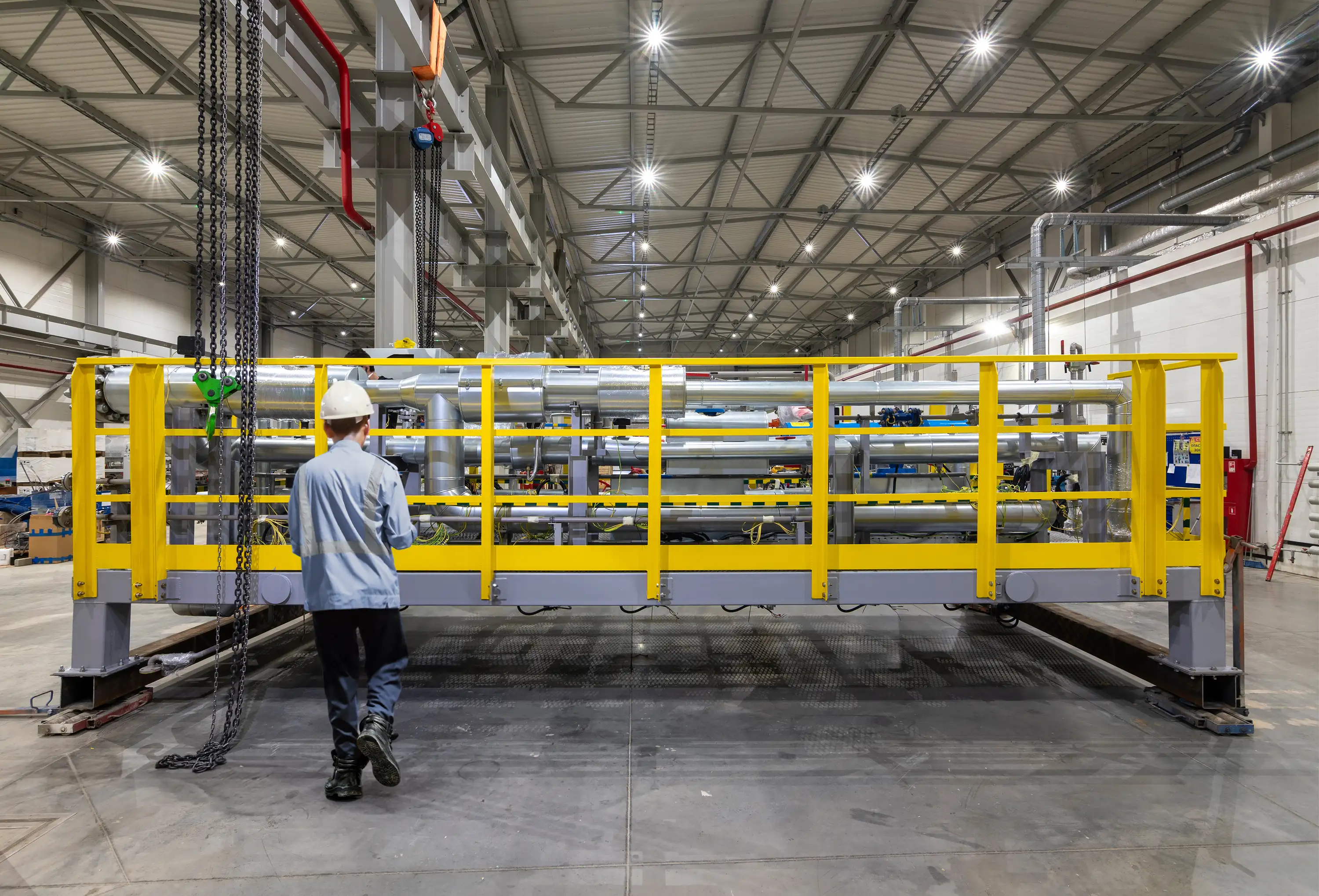
Cartridge-based design supports straightforward element changeout with reduced downtime, which can be important for turnarounds and incremental debottlenecking programs.
Head Office (UAE)
Tel.: +971 50 951 8133
E-mail: info@semicom-membrane.com
Business Center Logistics City,
Dubai Aviation City,
P.O.Box: 390667, Dubai, U.A.E.